Top News of Last Week with ANA

Azad News Agency (ANA) published a number of scientific and technological news during the past week whose top ones are as follows:
Iranian VP Unveils 3 New Indigenous Technological Products
Iranian Vice-President for Science, Technology, and Knowledge-Based Economy Hossein Afshin unveiled three home-made products which were commercialized for the first time in the country.
The products unveiled during the third day of INOTEX 2025, included a data processing and storage server, an intelligent gas turbine performance monitoring system, and an industrial electric flange heater.
The data server, developed by a tech company based at Sharif University’s Science and Technology Park, is designed for high-demand IT, scientific, military, and industrial applications. It is optimized for AI and IoT environments.
The TurboAPM system, created by a company specializing in gas turbine technology, offers real-time monitoring, diagnostics, and lifecycle tracking of turbines. It integrates hardware and software to serve industries such as oil, gas, petrochemicals, steel, and mining.
The electric heater, presented by a veteran Iranian thermal equipment manufacturer, features precise temperature control and high safety for hazardous industrial settings, especially in energy sectors.
Iranian Firm Develops Smart Financial Systems by Using AI
An Iranian financial information processing company, named ‘Part’, unveiled a number of innovative infrastructures, including electronic authentication and smart validation systems at the INOTEX 2025 exhibition.
“With more than 1,300 experts in the fields of artificial intelligence, information technology and network infrastructure, our company has been able to develop different services, including electronic authentication, digital promissory notes and visas and smart validation that facilitate offline access to banking and financial services for people at any time and place,” Hossein Nasseri, a member of the company’s business development team, told ANA.
“The company also supports start-up businesses by introducing a platform which includes 100 artificial intelligence services in the fields of machine vision, speech processing, natural language and data mining,” he added.
“Meantime, the company has launched three specialized colleges in the fields of artificial intelligence, financial literacy and business that cover students and enthusiasts,” Nasseri said.
Iranian Company Produces Indigenous Ultrasound Devices
Experts at an Iranian company managed to produce ultrasound devices which have a significant competitive advantage over foreign models due to their domestic production, indigenous software, and high speed of parts supply.
“As one of the few manufacturers in this field in Iran, Novin company has presented two models of ultrasound devices to the market, and about 80 percent of the parts for these devices are produced domestically,” Atayee, a technical and production manager of Novin company, told ANA on the sidelines of INOTEX exhibition in Tehran.
“The design and production of electronic boards, mechanical parts, and software for these devices have been carried out in Iran and this allows for the rapid implementation of changes desired by doctors and has created high flexibility compared to foreign devices,” he added.
“Unlike importing companies that face high costs and long delays in supplying parts, Novin company, due to domestic production, supplies and delivers parts in the shortest possible time, within two to three days at most," Atayee said.
Iranian Knowledge-Based Firms in Pardis Technology Park Make 2,500 Products
The head of Pardis Science and Technology Park announced the endorsement of 6 international agreements worth $2 billion at INOTEX 2025 exhibition in Tehran .
Addressing the closing ceremony of the 14th INOTEX 2025 expo, Mehdi Saffarinia, said, “Commercialization and production of competitive products are among the goals of this park, and thanks to this approach, $3.5 million has been invested in this park by the private sector so far.”
Noting that the private sector has created 400,000 square meters of research and technology space in Pardis Technology Park, he said, “9,000 people are working in the park's complexes and the companies in this park have succeeded in exporting 340 million euros (worth of their product).”
Saffarinia added that 2,500 knowledge-based products have been manufactured by companies stationed at the park.
“We are also responsible for the technology exchange network of 8 Islamic countries (D8). Also, we are launching a joint fund with 8 Islamic countries. Meantiem, 30 foreign centers have cooperation agreements with Pardis Science and Technology Park,” he said.
Iranian Company Manufactures Ultrasonic Homogenizers for Labs, Industries
An Iranian knowledge-based company succeeded in designing and manufacturing different types of ultrasonic homogenizers with different power, volume and frequencies.
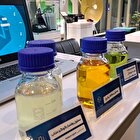
The homogenizer produced by the company, uses ultrasound waves to homogenize various fluids and can be applied for dispersing nanoparticles and creating emulsions, cell disruption and homogenizing solutions.
The device has been designed in a way that engineering and sound safety principles are observed in it, and its body is placed in a double-walled chamber with a transparent plexiglass door to reduce noise and allow the process to be observed live.
Other outstanding technical features of this device include adjustable output power up to 1200 watts, 20 kHz frequency with automatic tuning after replacing the horn, working volume from 250 ml to 4 liters, fluid temperature measurement sensor, and adjustable timer up to 15 minutes to control the duration of operation and rest.
Ultrasonic homogenizers have a wide range of applications, including disintegrating cells and biological tissues, DNA protein extraction, RNA hydrolysis, and protein microencapsulation in biology. In chemistry, they are used to accelerate and increase reactions output.
Iran to Host Int’l Oil, Gas, Petchem Exhibition
The capital city of Tehran will host the 29th International Oil, Gas, Refining & Petrochemical Exhibition (Iran Oil Show 2025) on Thursday May 8.
The event, which runs for four days, will draw participation from over 2,000 domestic and foreign companies, including 150 international firms from 14 countries.
Due to overwhelming demand, the exhibition space has expanded to over 40,000 square meters, with five additional halls added this year, Shana reported.
The exhibition, Iran’s largest trade event for the energy sector, focuses on investment opportunities, cutting-edge technologies, and domestic industry capabilities while fostering partnerships with foreign investors.
Kerman to Turn into Hub for Iran’s Spatial Data Observation, Management
Head of Iran's Space Research Center Vahid Yazdanian announced that Kerman province enjoys the potential to turn into the country’s hub for spatial data observation and management.
“The establishment of a ground station to receive satellite images can accelerate data collection, and the resulting information is the foundation for new services for agencies like the Agricultural Jihad, natural resources, regional water companies, and other service providers,” Yazdanian said.
"To build this station, a flat land in the plains of the province and a safe and independent fiber optic network are needed for data transmission. By implementing this plan, Kerman can become one of the country's spatial data observation and management hubs and create suitable job opportunities for the region's youth," he added.
Yazdanian also suggested setting up a lithium battery production plant and a solar panel production plant, stressing Kerman's industrial and mining capacities.
Iranian Scientists Make Environmentally-Friendly Nanostructured Supercapacitor
Iranian researchers at the University of Mazandaran developed a nanostructured supercapacitor that offers very high specific capacitance, very low electrical resistance, appropriate energy density and power density along with good cyclic stability.
The design, modeling and construction of a high-performance nanostructured supercapacitor is a research project by Shahram Qassemi-Mir, a faculty member of the University of Mazandaran, which he completed with the support of the National Science Foundation of Iran.
“After designing the structures of the supercapacitor, their properties were evaluated by computer modeling. Subsequently, these compounds were prepared in the laboratory and subjected to structural and electrochemical studies as supercapacitor electrode materials. Finally, after optimizing various components, a laboratory supercapacitor sample was manufactured,” said Qassemi-Mir.
He explained that theoretical computer studies and practical laboratory research conducted during the implementation of this project showed that carbon nanomaterials are ideal options in the design of electrodes for supercapacitor systems due to their high surface area, significant electrical conductivity, and very high physical and chemical stability. “The supercapacitor prepared in this study offered very high specific capacitance, very low electrical resistance, appropriate energy density and power density, along with good cyclic stability. In producing the supercapacitor, we also considered low manufacturing cost, easy manufacturing method, and the use of available and preferably environmentally-friendly raw materials,” Qassemi-Mir said.
Iranian Company Uses Nanotechnology to Produce Antibacterial Blankets
The research and development team of a textile plant in Iran acquired the technical know-how of producing antibacterial nanofibers and made blankets for airlines that are durable and enjoy antibacterial properties.
“Our company's research and development (R&D) team, by obtaining an exclusive formulation, succeeded in applying nanotechnology in the production of these blankets, and since then, all blanket products have been offered in an antibacterial form with nanotechnology,” said Amin Moqaddam, the managing director of the textile plant.
He explained that by using nanotechnology, the textile company has produced a polyester acrylic blanket that contains active nanoparticles with antibacterial properties. “Due to their high surface-to-volume ratio, these nanoparticles react with bacteria and, by inactivating their vital enzymes, deprive them of the ability to grow and survive. As a result, blankets produced with this technology can prevent the transmission of microorganisms among passengers,” Moqaddam said.
“In addition to its antibacterial properties, the blanket is also highly resistant to fire. This feature is specially crucial in confined and sensitive environments like the aircraft cabins,” he added.
Isfahan’s Science, Research Town Exports 60 Million Dollars of Products
The head of Isfahan’s Science and Research Town announced that nearly $60 million worth of products were exported from this town in one year.
“Now 30 years has passed after the establishment of Isfahan’s Science and Research Town,” said Seyed Mehdi Abtahi Foroushani.
He underlined that after 30 years, Isfahan’s Science and Research Town, as one of the country's science parks, is hosting 762 companies.
“Two years ago, we had a turnover of 35,000 million tomans, exported nearly $60 million, and employed about 9,700 people in the Town,” Abtahi Foroushani said.
Isfahan Science and Technology Town (ISTT) is home of the UNESCO Centre for Technology Incubator and Science Park Development (IRIS).
Iran-Made Nanobubble Technology Eliminates Need for Fungicides in Greenhouses
A large number of greenhouses in Iran are using the home-made nanobubble generators to increase products without any need to fungicides.
“Using this technology has significantly improved the quality of our products and the health of plant roots has noticeably increased. Also, there was no need to use fungicides during the cultivation period,” said Mahin Zare’, a greenhouse owner in Iran.
“Among the positive changes observed in the products have been the improvement in the color, size, and shape of fruits and these differences are noticeably visible compared to greenhouses that do not use nanobubble technology,” she added.
Seraj Nanotechnology Company offers two types of nanobubble devices to suit greenhouse conditions; static devices for greenhouses with manual preparation of nutrient solutions, and online devices for systems equipped with hydroponic feeding automation.
Iranian Company Makes Nanostructured Anti-Wear Welding Wires
An Iranian technological company used nanotechnology to produce wear-resistant flux cored welding wires which enjoy a much higher performance than similar domestic and foreign products.
No nano-based raw materials are used in the production of these welding wires, but the formulation is engineered in such a way that nanostructures are formed at the welding site during the welding process. These nanometer structures provide high strength and special resistance to wear and impact.
Haniyeh Farahi, the R&D manager of the company, said that the technology can be applied in the mining, ceramic, crystal and steel industries,
“Price reduction compared to foreign models, savings in material consumption with a deposition rate of 95 percent, and welding without the need for shielding gas are among the advantages of these products,” Farahi said.
“Also, the anti-wear plates produced by our company, with a microstructure containing nanometer carboborides, enjoy much higher wear resistance than domestic and foreign samples. These plates have been produced thinner and lighter due to modern welding technology and, despite the presence of stress cracks, have maintained the ability to form and bend,” she noted.
Farahi announced the annual production capacity of the company's nano welding electrodes as 300 tons, and said, “At present, nearly 120 tons are produced per year.”
Iran-Made Nano-Based Nail Polish Treats Fungus
The Iran-made Amoronic Amorolfine 5% nail polish, a nanotechnology product of Kimia Kalay-e Razi company, presents an effective and long-lasting treatment for onychomycosis.
The nano-based product allows for the slow release of the drug onto the nail surface and is an effective solution for the treatment of fungal nail infections (onychomycosis).
This topical antifungal medicine contains the active ingredient amorolfine (5%), a compound derived from morpholine that inhibits key fungal enzymes, stops the process of sterol synthesis and helps eliminate the pathogen.
After application to the nail, this medicinal compound creates a transparent and colorless layer that adheres well to the nail surface and is resistant to daily washing and bathing.
Nail fungus is a common infection of the nail. It begins as a white or yellow-brown spot under the tip of your fingernail or toenail. As the fungal infection goes deeper, the nail may discolor, thicken and crumble at the edge. Nail fungus can affect several nails.
Iran’s Southern Province of Kerman Produces 8,000 MW of Solar Energy
Kerman is one of the Southern provinces of Iran which produces more electricity than it consumes in electricity production and combined cycle power plants and also contributes to national dispatching.
“In the field of solar energy, given the good conditions and capacities that existed in Kerman province, we initially targeted the production of 2,000 MW of solar energy and, through the formation of a headquarters and an operational committee under that headquarters, we considered the development of solar power plants,” Mohammad Ali Talebi, the governor of Kerman, told ANA.
“After that we received many requests that were sent to Kerman province through various investors. Some of these requests were related to large economic enterprises in the province and had some requirements for the production of renewable energy,” he added.
“Kerman is one of the provinces that has favorable conditions in terms of solar radiation,” Talebi underlined.
4155/v